39 seconds
Yurii Pikush: Complex, multidimensional movement
The music of young Ukrainian composer Yurii Pikush is increasingly gaining popularity on global stages. At 27, he has composed nearly thirty works, collaborated with leading Ukrainian and Western ensembles, and had premieres at international contemporary music festivals in Ukraine, Poland, Germany, and the United States.
In this conversation, Yurii reflects on how he experiences his own music, how a young composer can integrate into the musical infrastructure, and the new challenges Ukrainian musicians face during the war.
TN: You rarely comment on your own music. In general, do you feel comfortable talking about your compositions? And do you think music, in general, needs commentary?
YP: Music definitely needs commentary, especially contemporary music. However, I find it difficult to comment on my own work. I feel like every word I say about it somehow diminishes the music, altering its meaning.
TN: And when others comment on your music?
YP: Usually, I don’t feel good about it.
TN: That’s an interesting way to start the interview.
YP: I can comment on a piece if I have verbalized its idea for myself. But sometimes I don’t verbalize it, and the idea simply emerges on its own.
TN: So, the foundation of your works is purely musical ideas that don’t require extramusical concepts?
YP: Yes. If I do verbalize my thoughts during the composition process, that text is only for me.
TN: You began your journey in music as a performer on the domra. When did you realize you were a composer?
YP: While studying domra in Dnipro, I occasionally wrote some music. Later, I started working with a teacher. I wasn’t sure I would get into the music academy in Kyiv, but I did. I probably started to feel like a composer towards the end of my master’s degree, when I realized I could actually create something.
TN: That’s probably connected to performances as well — hearing good ensembles play your music on a large stage.
YP: Yes, that has a significant impact. Of course, before that there were student concerts — students write, students perform.
TN: We’ve established how you react when others comment on your music. But how do you feel when your music is performed? Have you been lucky with performers?
YP: There are composers who, if a piece sounds bad, are sure it’s the performers’ fault. In such cases, I tend to see my own shortcomings — things I missed, sometimes unnecessary complexity. I try to make sure my music is as suited as possible to the performers’ capabilities.
It’s good when the first performance is given by musicians who aren’t used to new music — they’ll point out all your mistakes. Fortunately, though, my premieres have been performed by really great ensembles — ones who truly know how to play contemporary music. Even if there are issues in the piece, it doesn’t show in the performance. That’s wonderful, but in such cases I can’t analyze my mistakes.
For example, in the piece Domi Res Militaris, there were some inaccuracies in the part writing. The premiere was performed by the Basel Sinfonietta conducted by Titus Engel — the musicians didn’t say a word to me and played it wonderfully. Later, when working with another orchestra on the piece, I discovered those inaccuracies.
Or another example: the premiere of Be a Cycle was performed by the Ukrainian ensemble Nostri Temporis — incredible musicians: Natalia Kozhushko-Maksymiv, Andriy Pavlov, Nazarii Stets, and Dmytro Tavanets. Later, the piece was performed by the New York-based ensemble PinkNoise. I had gotten used to hearing the music from Nostri Temporis, but when I listened to PinkNoise I was surprised — why is the tempo so slow? I checked: their performance was exactly in line with the metronome marking, just as indicated in the score. Nostri Temporis had made their own adjustments, playing that passage at a faster tempo. I thought it was really good, that it should be that way — so I never compared it against the metronome marking. PinkNoise played the piece very precisely, but now I feel like something is missing in that performance.
TN: There’s also the opposite view: that a performer should reproduce the precisely notated text without adding anything of their own.
YP: I haven’t yet had the experience of a piece being played in a completely different way. Where possible, I always attend rehearsals. After all, I don’t have 20 pieces being performed every month. And I still don’t feel like such an authority that I wouldn’t want to discuss things with performers.
TN: So in your music, performers become co-creators, and as a result, pieces can exist in various independent interpretations?
YP: It seems to me that music is always bigger than its author. Especially since I’m still a “young composer” — most of my pieces are receiving their premieres. You write and you don’t know how it will sound live. It’s always interesting to hear your music in different interpretations.
TN: In the context of which music did your style develop?
YP: In the early years, I looked at many scores, listened to many recordings, but didn’t understand much. It was a long process: I felt that I wanted to find some “strange” texture, some strange harmony, but I didn’t know how. Even when I saw how others did it — how could I do it myself without copying anyone? It was only when I could fully grasp the essence of new techniques and use them the way I wanted that I truly made them my own. It’s like learning a foreign language.
At different times, different composers have influenced me. The classic set: Ligeti, Sciarrino, Grisey, Feldman, Xenakis, Haas… When I started analyzing Lutosławski’s scores, I gained an understanding of how to work with an orchestra. It is a living organism. Like clay being shaped into vessels as you go — Lutosławski’s orchestra seems to be a single element, an organic force that grows from within itself. And it is so refined.
With composers of earlier generations, it is easier to choose reference points — they have passed through the filter of time: the greater the historical distance, the more reliable they are. Concerts of contemporary music, on the other hand, resemble a lottery.
TN: What, for you, is a marker of musical contemporaneity? There are formal criteria, of course — music written now, in our time. But even now, one can write very different kinds of music.
YP: At the beginning of my studies at the academy, it seemed to me that contemporary music meant lots of dissonances, unpleasant sounds, molto espressivo (smiles). I remember participating, in my third year, in my first composition masterclass, “COURSE,” in Lviv. Among the participants were two composers from Turkey, one from Belarus, and among the Ukrainians — Kateryna Gryvul, who was studying in Poland at the time, Marta Haladzhun, Mykhailo Chedryk, and myself.
All of them were writing something like “vzhzhzh pshhhh phkh phkh phkhhh tttt piu piu.” They knew how to write that kind of music — I didn’t. I was the only one whose score actually contained notes. I felt like something of an ugly duckling among them. And recently I listened again to that piece of mine — it’s perfectly fine! Of course, now I can see what could be improved, but it’s entirely good. That’s how much context can affect perception.
Here’s another similar situation. During masterclasses in Warsaw, Bernhard Lang told a story that really resonated with me. He had a student in Graz from Serbia who wrote music using folk material. Lang liked his music very much and valued that individuality. A month later came the disappointment: the student brought in a score full of nothing but “khhh pshhhh chchch” — because his classmates had explained to him that this was how one is supposed to write music today.
TN: And yet compositional techniques are far from the most important factor.
YP: Viktor Domontovych — a Ukrainian modernist writer — has a phrase: “to be contemporary is precisely not to be contemporary.” When you try to hit the mainstream, you become similar to those you orient yourself toward — you end up repeating them. Contemporaneity, according to Domontovych, means turning in a different direction. In the mid-20th century, composers proclaimed the emotionlessness of music. It seems that today, emotion and sincerity are returning once again.
I think about this when I listen to contemporary composers who work with noise, with ostensibly unpleasant sounds — and yet the result is beautiful. It seems to me that the composers who proclaimed the emotionlessness of music were like explorers who burst into unknown territory and tried absolutely everything. Now, with the change of generations, a new civilization is taking shape. And in general, if there is a paradise for scores, they enter it without dates.
TN: How do you assess your own path? What changes do you see in your writing?
YP: I didn’t try to write “contemporary” music — I wrote the way I could. As my knowledge accumulated, the result was different each time. My main point of reference became elusiveness in space, textural looseness. I like how Lem describes the ocean in Solaris. In the novel, this ocean reads human consciousness. All of a sudden, various symmetriads and asymmetriads would grow within it… I would like my music to be like that too — without clear contours, with different images flowing into one another.
TN: It seems to me that for you, what matters is not so much the constant search for something new as the refinement of an already discovered musical language in each subsequent work.
YP: Lutosławski has a series of works titled Chain, where form is constructed according to the principle of a chain. I like this metaphor. That’s how I try to work: in each new piece, I take what I learned from the previous ones and try to add a new link to the chain. Sometimes it seems to me that I am writing one long work in the hope of eventually writing the perfect one.
From time to time I conduct a kind of test: I listen to one of my pieces that I was satisfied with at the time. If I am still satisfied with it, it means I haven’t changed. If I am no longer satisfied, it means I have moved to a new stage — either aesthetically or technically.
TN: How do you work with sound material in your compositions — do you make calculations, or do you rely on intuition?
YP: I use a combined method — analytical and intuitive. At first, certain numerical proportions emerge. For example, I often use the Fibonacci sequence. But each time you have to find a new way to apply them. Once the material has accumulated, I no longer follow algorithms but trust my intuition. So I usually begin by constructing the structure and finish intuitively.
TN: Do you draw diagrams?
YP: Yes, I try to. It’s good when you experience the compositional process tactilely — writing, playing, entering things into the computer. You engage with the material in different ways. Once I had to write a piece and the work simply wouldn’t move forward at all. I just drew the stage and how the performers would be positioned — and that helped me imagine what they should play.
Lately, my circumstances are such that I work only on a laptop. This affects the process — possibly not for the better. Roman Lopatynskyi, a Ukrainian pianist, brought me a gift from Berlin — a beautiful music notebook and a set of very fine pencils. And I still haven’t written anything in it. I keep postponing it, thinking: right now I don’t know what to write, but someday I definitely will.
TN: Like that china set kept in the display cabinet.
YP: Yes, exactly (laughs).
TN: Does your psycho-emotional state reflect in your music in any way?
YP: Yes, but I can’t verbalize it. I feel something like I’m looking at myself, at the world, from the outside — and it’s so vast. I have mixed feelings — joy and, at the same time, an overwhelming sadness for something. And all of this seems to be concentrated in a knot. Each piece is a search for another way to enter this state.
TN: Do you have any special rituals to capture this feeling?
YP: I enter this state when the music is either being completed or has already been completed. There’s no ritual purely in the process of working. I find it very difficult to start. Writing a new piece is like trying to break through a brick wall with my head. My entry into the process happens in small doses — I work for several dozen minutes and then have to switch. But when a certain cluster of ideas and material starts to build up, I work non-stop.
If I’m already in the process, I can’t do anything else in parallel. In this sense, I’m a single-task person. If I were a computer, my specs would say I have one core, one thread.
TN: You invest a lot of effort in promoting your music — various grant and fellowship programs. Did your education at the academy give you any sense of how to integrate into the music infrastructure?
YP: After graduating, I didn’t know what to do next. My wife and I had a daughter, and I needed to make money. But where do composers get paid?
I even thought about changing professions. But then I participated in a project by the Swiss ensemble Proton Bern, and around the same time, the Myroslav Skoryk composition competition appeared, with very good prizes. I thought: if I win the competition, I’ll try to continue writing music. I had very little time to write the competition piece, but I managed — and won first prize.
After the competition, Roman Rewakowicz commissioned a work from me for the Days of Ukrainian Music in Warsaw. At the same time, I received a commission from the German festival Days of New Music in Bamberg, and the Ukrainian ensemble Nostri Temporis performed the piece. Thanks to this, I was invited to Warsaw Autumn — because the artistic director, Jerzy Kornowicz, had heard the piece. And somehow, one thing led to another.
TN: Another chain-like sequence.
YP: Yes. But now I no longer see a continuation of this chain. They say: anyone can write one brilliant sonata, but to write a second brilliant sonata, you have to be a Beethoven — something like that. To rephrase: anyone can get to Warsaw Autumn once, but to get there a second time — that’s a mark of quality. So far, there’s been no second time.
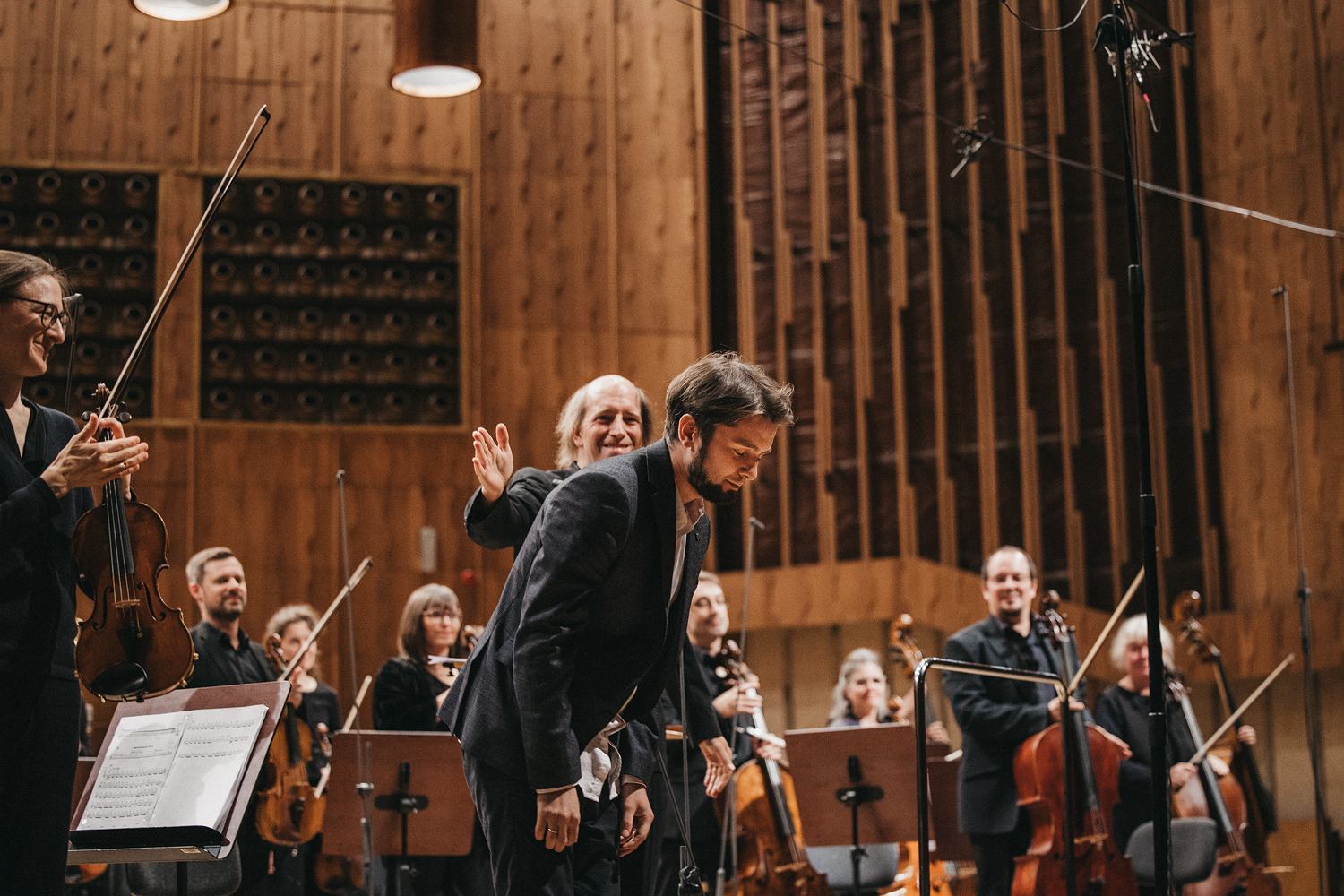
fot. Grzegorz Mart, Warszawska Jesień
TN: In September of this year, your music was performed in Germany at Musikfest Berlin. Was this your initiative, or was it a commission?
YP: Formally, I was commissioned to write the piece by the musicians of Senza Sforzando — a Ukrainian ensemble of new music from Odessa — but without a fee. I agreed because it’s a great ensemble, and I had never before written music for voice with ensemble.
Still, a full commission is when the composer is paid a fee. For us, this is still often treated as a hobby.
TN: So, does the profession of a composer not really exist in Ukraine?
YP: Absolutely. There are some isolated initiatives from performers who commission new works from composers. But on the institutional level…
One of my most recent works — Solum for cello and piano — was written thanks to a grant from Jam Factory. But if there were at least a few such grants per year — not only for me, but for many others — the situation with new music in Ukraine would be completely different.
Many people leave this field, or never enter it at all, because they see no prospects. There are good musicians who move into IT or design.
TN: Or into commercial projects.
YP: Commercial projects — that’s a separate niche, and you have to know how to break into it. But I can’t imagine myself doing that. It’s like that china set — I know it exists, but I’d probably never pick it up. I’ve been lucky that, at least for now, I can remain true to myself in music. Everything I’ve written on commission I’ve written sincerely; it’s the kind of music I truly wanted to compose.
TN: By the way, speaking of commissions — you collaborate a lot with festivals.
YP: Not that much.
TN: In the context of Ukrainian composers under 30 who have stayed in Ukraine, it’s still quite a lot. When you’re orienting yourself towards a festival or ensemble, you obviously try to meet their expectations, to fit their standards. Does such collaboration push you in a specific direction and make the work easier, or does it limit you?
YP: Last year, I received two commissions for different festivals — Warsaw Autumn and Days of Ukrainian Music in Warsaw, both in September. At Warsaw Autumn, the Basel Symphony Orchestra was supposed to perform, and at Days of Ukrainian Music, Kyiv Camerata was scheduled. The two works turned out to be completely different. I understood that Warsaw Autumn has its own compositional “dress code,” so I tried to be sincere while also creating a piece that would fit the format.
YP: For Camerata, I wanted to write something more accessible to the audience — but this doesn’t mean compromising on quality. I understood that the audience there would be different from that at Warsaw Autumn. Indeed, quite a few Ukrainians — displaced persons with no professional connection to music — came to the concert. The piece performed there, Escape Velocity, I really like. As for orienting yourself towards a festival — there’s no point in adjusting to a format that doesn’t suit you. Right now, I feel very comfortable with the formats I’m working in.
TN: At Warsaw Autumn, your orchestral work Domi Res Militaris was performed. Before we discuss the history of that concert, I’d like to return to the topic of commenting on music. You once mentioned that there’s a moment in this piece that is hidden from the listener — not explicitly stated, but important conceptually. Could you say more about that?
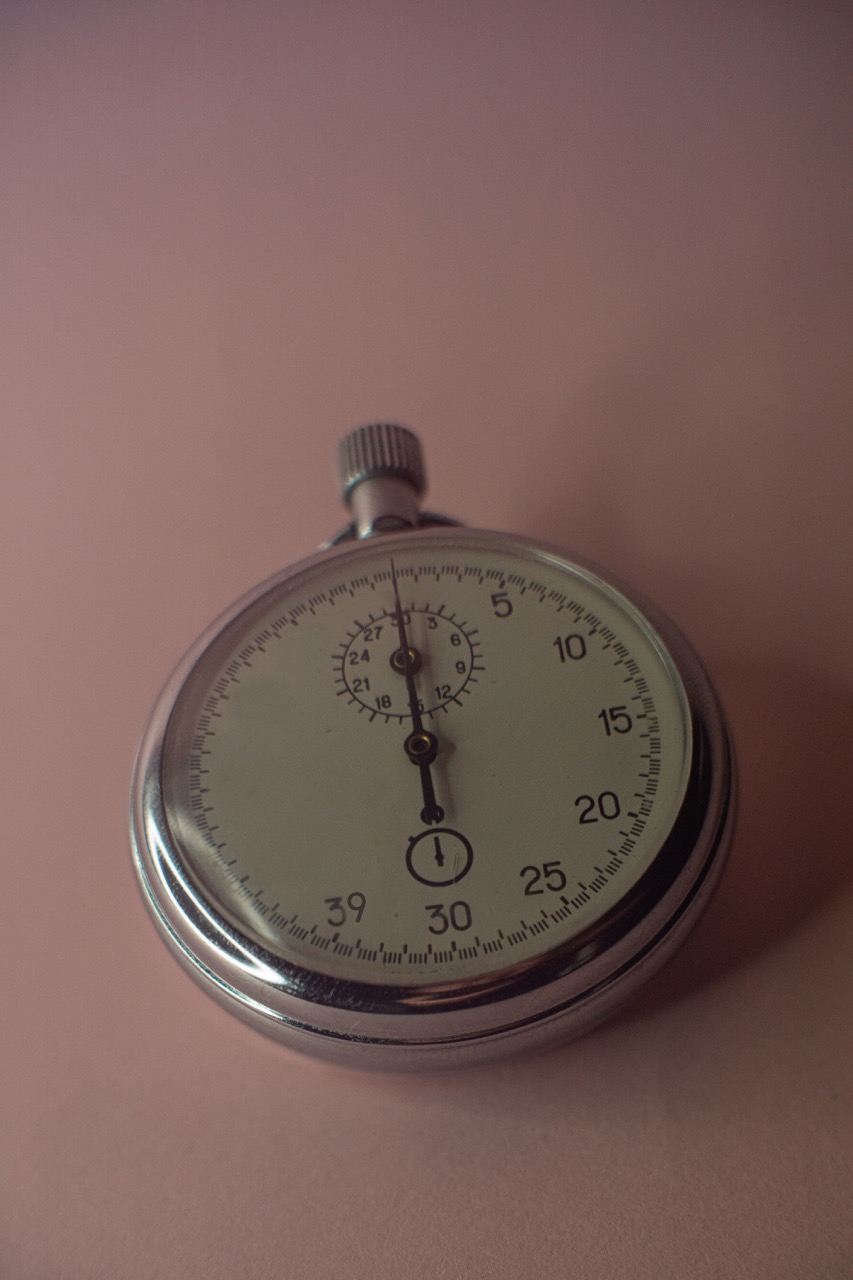
YP: Before I received the invitation to Warsaw Autumn, there was an incident in which a Russian missile entered Polish airspace and remained there for 39 seconds. The Polish air force simply observed it: if it flew towards them, they might try to shoot it down, but if it returned to Ukraine — well, let it go. This really struck me. As soon as I was invited to the festival — without knowing anything about the concert theme or what my piece was supposed to be — I decided to somehow convey this story through music.
But how? I see no point in shouting about it. There’s a difference between writing “I love you” on a fence for everyone to see and passing a note under the desk. No one sees it, but it’s there.
The entire score is written in conventional time notation, but in one episode the notation is based on seconds — 39 seconds. At that moment, a kind of haze descends over the orchestra, while the flute plays in a high register — like a distant whistle. The fragment ends with a sharp pizzicato in the double basses. A sonic representation, so to speak.
TN: Did you discuss this idea with the musicians?
YP: No. If you’re familiar with the context, you might still wonder why exactly 39 seconds. But no one asked. In the end, I couldn’t find the right way to present this idea publicly — and I didn’t particularly want to.
TN: How do you feel about addressing the theme of war through music? In your works, this theme is never directly articulated.
YP: I really don’t like direct messaging in music. I think music about war can exist, but it needs to be tailored to the audience it’s written for.
TN: Are you referring to the Ukrainian audience or the Western one?
YP: Yes. I haven’t heard of any work related to the war (including mine) that was written for a Western audience and then resonated well with a Ukrainian one. In Europe, you can, perhaps, bang on something or imitate a siren, but why do that in Ukraine? People here hear it anyway. For a Ukrainian audience, such things need to be addressed much more subtly.
It’s especially striking when Ukrainian composers living abroad write such music — as if they’re telling the story of our war to a Western audience, even though they themselves aren’t here.
TN: That might be their attempt to signal a connection to the Ukrainian experience. Or perhaps it’s opportunism.
YP: I think it’s an attempt to grab attention. There is a great deal of manipulation around the theme of war — using a living wound as an opportunity to advance one’s career. I wouldn’t give myself the moral permission to do such a thing.
TN: A composer from a country at war can express their position both through music and through their public activity more broadly. In Ukraine, there is a growing consensus to pause Russian culture and refuse any collaboration with Russians during the war. The situation is different on Western stages. For example, at Warsaw Autumn your work was performed alongside a piece by Russian composer Sergej Newski. How did you arrive at your decision in this situation?
YP: I was conflicted. At first, I didn’t know that Newski’s piece would also be on the program. Later, I received an official letter of invitation that mentioned it. The letter stated that Sergej Newski was a Russian composer with an anti-Putin stance, living in exile in Berlin. I was already familiar with his name. He had come to Kyiv and Lviv for masterclasses and had many friends here. His daughter lives in Kyiv.
The concert was dedicated to the theme of war. The program also featured works by Swiss composer Stefan Keller and Polish composer Aleksandra Słyż. I think that if I had refused, and the concert had consisted of pieces by the Swiss composer, the Pole, and the Russian — even one who hadn’t lived in Russia for 30 years — that would have been worse.
TN: Did you discuss this situation with the festival organizers?
YP: No. At that time, I had just finished my master’s studies at the music academy. Performing at Warsaw Autumn was a huge personal challenge for me — not to look like a “boy” compared to the other composers whose works were in the program.
A year earlier, I had participated in composer masterclasses at Warsaw Autumn. I remember thinking on my way to the train station: “If I return here as a composer in 10 years, that would be a good result.” And I came back a year later. I’m sure I made the right decision for myself.
TN: Aside from your personal choice, there is the festival’s position. The fundamental issue is the decision to put a Ukrainian and a Russian composer on the same stage, especially under unequal conditions — Newski has had a long-established career, whereas you were still a recent graduate at the time.
YP: The thing is, this concert was a joint project between Warsaw Autumn and the Basel Symphony Orchestra. The orchestra’s conductor had been working with Newski for a long time. He had commissioned works from him and Stefan Keller. Warsaw Autumn then commissioned works from Aleksandra Słyż and me. Such commissions usually come six to nine months before the deadline — but mine came only about three months before. Perhaps this decision was made at the last minute.
Warsaw Autumn operates according to its own standards, and the audience there has certain expectations. I think it was important to present Ukrainian music with a piece that fits the festival’s format.
TN: We’ve already discussed how well that format aligns with your approach to music. So, to close, I’ll ask you: how do you listen to music — both other people’s and your own?
YP: I like to listen to music while traveling, while in motion. Walking with headphones is the perfect option. It can be completely different music each time — I don’t have a set playlist. Honestly, I’m not really a music enthusiast.
I imagine my music like that little glider on a steamboat that can fly without an engine, catching air currents. Sometimes it dips into a fall, but at the last moment finds the current again. I love movement in music — complex, multidimensional movement. You have to know how to find a new current.